



Key numbers
- Batteries (2025+ US): 63 kWh Standard Range and 84 kWh Long Range
- 10–80% on 350 kW DC: about 20 minutes (Hyundai); 19 min 33 s measured by EVKX
- Tesla Supercharger, 10–80%: about 24 min (63 kWh) and 30 min (84 kWh), per Hyundai
- Home Level 2 (10.9 kW onboard): about 8 h 45 min from empty for the 84 kWh pack
- Cost to charge 20–80% at 18¢/kWh: about $10.31 for the 84 kWh pack
On this page
- How to use the Ioniq 5 Charging Time Calculator
- How long does it take to charge a Hyundai Ioniq 5?
- What is the Ioniq 5’s charging speed on DC fast chargers?
- How long does an Ioniq 5 take at a Tesla Supercharger?
- How long does an Ioniq 5 take to charge at home?
- How much does it cost to charge an Ioniq 5?
- Which Ioniq 5 battery charges fastest?
- Why is my Ioniq 5 charging slowly?
- How many miles does an Ioniq 5 add in 10 minutes of fast charging?
- Does fast charging hurt the Ioniq 5’s battery?
- Background: the Ioniq 5 and its 800-volt platform
- Frequently asked questions
How to use the Ioniq 5 Charging Time Calculator
- 1Pick the presetsChoose the car. This fills in typical values for you; every field stays editable.
- 2Check or enter your numbersAdjust charger, usable battery size (kWh), charge from (%), charge to (%), car’s max ac charging (kW), car’s max dc charging (kW) and efficiency (mi/kWh).
- 3Check the assumptionsAC time = energy ÷ (lower of charger and car limit, less ~12% losses). DC time assumes the usual taper: about 60% of peak power on average up to 80%, about 25% above 80%. Cold batteries charge slower.
- 4Read the resultsThe calculator shows charging time, energy added to the battery, peak power, range added, range added per hour and full charge 0 → 100%, updated as you type.
Results update as you type. Back to the calculator ↑
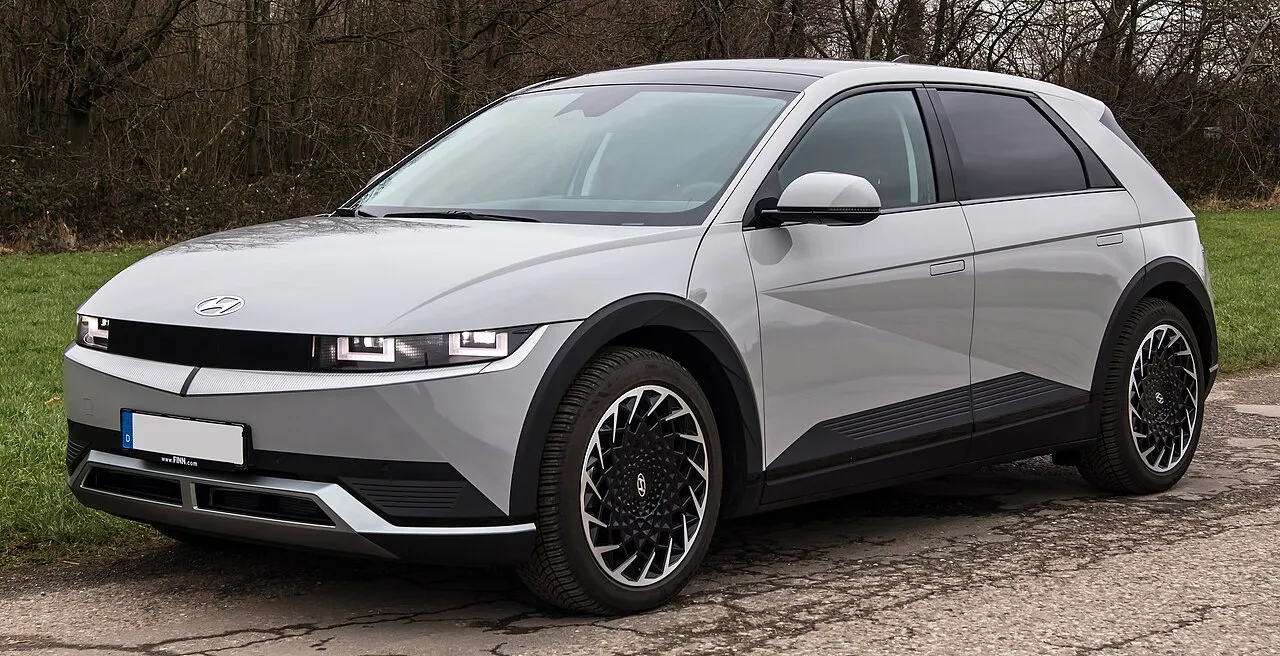
The Hyundai Ioniq 5 built its reputation on charging speed. Its 800-volt battery lets it go from 10% to 80% in about 20 minutes on the right charger, which is faster than most EVs of any price. But the right charger matters: the same car can take 30 minutes at a Tesla Supercharger and well over an hour on a 50 kW unit. This page explains each case, with home charging times and costs.
The calculator above defaults to the 84 kWh Long Range on a 350 kW charger. Switch the charger to a home Level 2 unit or a 150 kW station, change the start and end percentages, or choose the older 77.4 kWh preset if you drive a 2023–2024 car. A kWh (kilowatt-hour) measures battery energy; kW (kilowatts) measures charging power.
How long does it take to charge a Hyundai Ioniq 5?
Short answer: about 20 minutes for 10–80% on a 350 kW DC charger, about 30 minutes at a Tesla Supercharger, and about 8 h 45 min from empty to full on an 11 kW home charger (84 kWh battery).
| Charger | Power at the car | 84 kWh: 20→80% | 84 kWh: 10→80% | 84 kWh: 0→100% |
|---|---|---|---|---|
| Level 1, 120 V outlet | 1.4 kW | 40 h 55 min | 47 h 44 min | 68 h 11 min |
| Level 2, 32 A wallbox | 7.2 kW | 7 h 57 min | 9 h 17 min | 13 h 15 min |
| Level 2, 40 A | 9.6 kW | 5 h 58 min | 6 h 58 min | 9 h 57 min |
| Level 2, 48 A | 10.9 kW (car limit) | 5 h 15 min | 6 h 8 min | 8 h 45 min |
| DC fast, 50 kW | 50 kW | 1 h 41 min | 1 h 58 min | n/a |
| DC fast, 150 kW | 150 kW | 34 min | 39 min | n/a |
| DC ultra-fast, 350 kW | up to ~260 kW | 19 min | 23 min | n/a |
These are this site’s calculator figures: AC times include 12% losses; DC times assume an average of 60% of peak power up to 80%, which is conservative for the Ioniq 5 because its charging curve stays high. Hyundai’s own figures are faster at the top end: its European site quotes under 18 minutes for 10–80% at 350 kW and 76 minutes at 50 kW for the 84 kWh battery, and EVKX measured 19 minutes 33 seconds with a 260 kW peak.
Worked example
Worked example: 84 kWh Ioniq 5, 10% to 80% on a 350 kW charger. Energy added = 84 kWh × 70% = 58.8 kWh. Hyundai’s 20-minute figure implies an average of 58.8 ÷ (20 ÷ 60) = about 176 kW. At about 3.5 miles per kWh, those 58.8 kWh add roughly 205 miles of range: about 10 miles of range for every minute plugged in.
What is the Ioniq 5’s charging speed on DC fast chargers?
Short answer: peak power is about 260 kW in independent testing, and the car averages roughly 175–180 kW from 10% to 80% on a 350 kW charger.
DC fast charging (sometimes called Level 3) feeds direct current straight into the battery. What sets the Ioniq 5 apart is the shape of its charging curve: instead of peaking briefly and then falling, it holds high power across most of the 10–80% window. The 2025 update raised the Long Range battery to 84 kWh while keeping the 20-minute claim; a Hyundai US release from November 2024 lists about 20 minutes for 10–80% on a 350 kW charger for both batteries.
Why does a 150 kW charger take longer than half the time of a 350 kW one?
Short answer: because the Ioniq 5 can draw more than 150 kW for most of the session, a 150 kW unit becomes the limit for the whole charge, so 10–80% takes roughly 30–40 minutes instead of 20.
That is why the car type and the station both matter. Cars with a 150 kW peak, such as the Mustang Mach-E, lose nothing on a 150 kW charger; the Ioniq 5 loses about 15 minutes.
How long does an Ioniq 5 take at a Tesla Supercharger?
Short answer: about 24 minutes (63 kWh) or 30 minutes (84 kWh) for 10–80%, according to Hyundai, using the car’s native NACS port.
US-built 2025 Ioniq 5s were the first non-Tesla cars sold with a native NACS (SAE J3400) charging port. Green Car Reports noted that Supercharger sessions are slower than CCS ultra-fast sessions. The reason is voltage: Tesla’s V3 Superchargers deliver up to about 500 volts, and the Ioniq 5’s 800-volt battery needs the car’s inverter to boost the incoming voltage, which caps current. A 350 kW CCS station working at 800 volts avoids that step. If both are available on a trip, the CCS station (via the supplied adapter) is usually faster; the Supercharger is often closer, more reliable or cheaper. Our Tesla Supercharger cost guide explains non-Tesla pricing.
How long does an Ioniq 5 take to charge at home?
Short answer: about 8 h 45 min from empty to full on a 48 A Level 2 charger and about 5 h 15 min for a 20–80% top-up, for the 84 kWh battery.
Level 2 is 208–240 V AC charging. The car’s onboard charger accepts about 10.9 kW in the US (EV Database lists 11 kW for European cars), so a 48 A charger on a 60 A circuit is the fastest useful home setup.
| Home setup | Breaker | Miles added per hour (84 kWh RWD-type efficiency) | 63 kWh: 0→100% | 84 kWh: 0→100% |
|---|---|---|---|---|
| 120 V outlet, 1.4 kW | 15–20 A | about 4 mi | about 51 h | 68 h 11 min |
| 32 A wallbox, 7.2 kW | 40 A | about 22 mi | about 9 h 57 min | 13 h 15 min |
| 40 A wallbox, 9.6 kW | 50 A | about 30 mi | about 7 h 28 min | 9 h 57 min |
| 48 A wallbox, 11.5 kW | 60 A | about 34 mi | about 6 h 34 min | 8 h 45 min |
63 kWh times are calculated the same way (63 kWh ÷ power into the battery). The EV charger installation cost calculator shows what a 40 A or 48 A circuit costs to install, and the Level 1 vs Level 2 comparison explains when a 120 V outlet is enough.
How much does it cost to charge an Ioniq 5?
Short answer: about $10.31 for a 20–80% charge and $17.18 for a full charge of the 84 kWh battery at 18¢ per kWh, including 12% charging losses.
| Price per kWh | 63 kWh: 20→80% | 63 kWh: full | 84 kWh: 20→80% | 84 kWh: full | Cost per mile (84 kWh) |
|---|---|---|---|---|---|
| 13¢ (off-peak plan) | $5.58 | $9.31 | $7.45 | $12.41 | 4.2¢ |
| 18¢ (approx. US average) | $7.73 | $12.89 | $10.31 | $17.18 | 5.8¢ |
| 30¢ (high-cost state) | $12.89 | $21.48 | $17.18 | $28.64 | 9.7¢ |
| 48¢ (public DC, typical) | $19.30* | n/a | $25.74* | n/a | 14.6¢* |
*DC rows use 6% losses. The 18¢ row is close to the national average residential price in the EIA’s Electric Power Monthly. The EPA rates the 2025–2026 Ioniq 5 RWD at 30 kWh per 100 miles with 318 miles of range, and AWD versions at 32–36 kWh per 100 miles, so AWD and XRT cost 7–20% more per mile. Set your own rate in the EV charging cost calculator.
Which Ioniq 5 battery charges fastest?
Short answer: on a 350 kW charger both 2025+ batteries take about 20 minutes for 10–80%; the smaller 63 kWh battery finishes a home charge about two hours sooner.
| Spec | Standard Range 63 kWh | Long Range 84 kWh | 2023–24 Long Range 77.4 kWh |
|---|---|---|---|
| EPA range | 245 mi | 318 mi (RWD), 259–290 mi (AWD) | up to 303 mi |
| 10–80% on 350 kW | about 20 min | about 20 min | about 18 min (Hyundai claim) |
| 10–80% on Supercharger | about 24 min | about 30 min | adapter required |
| Full charge on 48 A | about 6 h 34 min | about 8 h 45 min | about 8 h 4 min |
| Charging port (US) | NACS | NACS | CCS1 |
2025–26 EPA ranges from fueleconomy.gov. Figures for 2023–24 cars use this site’s 77.4 kWh preset. Range gained per minute is what matters on a road trip: the Long Range adds more miles per session because it stores more energy in the same 20 minutes.
Why is my Ioniq 5 charging slowly?
Short answer: the usual causes are a cold battery, a 400-volt or shared station, a high starting charge and a DC charge limit set below 100% in the car.
- Battery temperature. Use the navigation to route to a DC charger, or turn on battery conditioning manually in winter. A cold Ioniq 5 can take more than twice as long.
- Station voltage. Older 400-volt chargers and Tesla Superchargers cannot run the car at its full 800-volt speed.
- Shared cabinets. Many 350 kW sites split power between two posts; a 175 kW share slows the session noticeably.
- State of charge. Arrive low. The curve is highest from about 10% to 50%.
- Home settings. If home charging is slow, check the AC current setting in the car and the charger’s configured amperage.
How many miles does an Ioniq 5 add in 10 minutes of fast charging?
Short answer: roughly 100–120 miles in the first 10 minutes on a 350 kW charger for the 84 kWh battery, falling to about 30 miles per 10 minutes on a 50 kW unit.
Miles per minute is the number that decides how long a road-trip stop lasts. Starting at 10%, the Ioniq 5 holds well above 200 kW for the first part of the session, so 10 minutes adds roughly 30 kWh, which is about 105 miles at the 3.5 miles per kWh this site uses, and more at the EPA efficiency of the RWD. The table shows how the charger type changes that.
| Charger | Approx. average power, 10→50% | Energy in 10 min | Range in 10 min (3.5 mi/kWh) |
|---|---|---|---|
| 350 kW CCS (800 V) | about 180–220 kW | about 30–37 kWh | about 105–115 mi (the 10→50% window holds about 34 kWh) |
| Tesla Supercharger (about 400 V) | about 120–140 kW | about 20–23 kWh | about 70–80 mi |
| 150 kW CCS | about 130–150 kW | about 22–25 kWh | about 75–85 mi |
| 50 kW CCS | about 45–50 kW | about 8 kWh | about 28 mi |
Average powers are estimates derived from Hyundai’s 10–80% times (20 minutes at 350 kW, about 30 minutes on a Supercharger, 76 minutes at 50 kW), not measured curves; real sessions depend on battery temperature and station output. The pattern holds: on this car, the charger you choose matters more than on a 150 kW-limited EV.
How many charging stops does an Ioniq 5 need on a 600-mile trip?
Short answer: typically two or three 20-minute stops on 350 kW chargers, starting with a full battery.
Leaving home at 100% with the 84 kWh RWD, a realistic highway range at 70–75 mph is about 250–270 miles. Driving to about 10% and charging to 80% each time gives roughly 200 miles per stop. A 600-mile day is therefore one full battery plus two stops of about 20 minutes on 350 kW chargers, or about 30 minutes each on Superchargers. Add a third short stop in winter, when highway range can drop by 20–30%. The Kelley Blue Book Ioniq 5 charging guide has more on planning around charger networks.
Does fast charging hurt the Ioniq 5’s battery?
Short answer: occasional DC fast charging is what the battery is designed for; heavy daily use of ultra-fast charging can add a little extra wear over many years, which the 10-year/100,000-mile US battery warranty is meant to cover.
The car’s battery management system controls charging power based on cell temperature and state of charge, which is why sessions slow when the battery is cold or nearly full. Habits that reduce long-term wear are simple: charge at home on Level 2 for daily driving, keep the everyday AC charge limit at 80–90%, avoid leaving the car at 100% for days, and precondition before fast charging in winter so the cells are warm. These habits also keep fast-charging sessions short, because a warm battery at low charge accepts the most power.
Background: the Ioniq 5 and its 800-volt platform
Hyundai launched the Ioniq 5 in 2021 as the first car on its Electric-Global Modular Platform (E-GMP), shared with the Kia EV6 and Genesis GV60. E-GMP’s 800-volt electrical system halves the current needed for a given power compared with a 400-volt car, which reduces heat in cables and cells and makes sustained high-power charging possible; the same platform also allows vehicle-to-load power outlets. The 2025 facelift brought the larger 84 kWh battery, the native NACS port on US cars and a new dual-voltage portable cable. For the closely related EV6, see the Kia EV6 charging time page, and for other cars use the general EV charging time calculator. Assumptions are listed on our methodology page. Hyundai and Ioniq are trademarks of Hyundai Motor Company; EV Cost Guide is not affiliated with Hyundai.
FAQ
Frequently asked questions
How long does an Ioniq 5 take to charge on a fast charger?
Hyundai quotes about 20 minutes for 10–80% on a 350 kW DC fast charger for both the 63 kWh and 84 kWh batteries of the 2025 Ioniq 5. EVKX measured 19 minutes 33 seconds for an 84 kWh Long Range AWD. On a 150 kW charger, expect closer to 30–40 minutes, and on a 50 kW unit about 76 minutes.
What is the Ioniq 5 max charging speed?
Independent testing by EVKX recorded a peak of about 260 kW for the 84 kWh Long Range. The car sustains high power for much of the 10–80% window, which is why it averages around 180 kW and finishes in about 20 minutes on a 350 kW charger. On 400-volt chargers, including Tesla Superchargers, it charges more slowly.
How long does an Ioniq 5 take to charge at home?
On a Level 2 charger matching its 10.9 kW onboard charger, an 84 kWh Ioniq 5 goes from empty to full in about 8 h 45 min and from 20% to 80% in about 5 h 15 min, including 12% losses. On a 7.2 kW wallbox the full charge takes about 13 hours. A 120 V outlet adds only about 4 miles of range per hour.
How long does an Ioniq 5 take to charge at a Tesla Supercharger?
Hyundai says the 2025 Ioniq 5 charges 10–80% in about 24 minutes (63 kWh) and 30 minutes (84 kWh) at a Supercharger using its native NACS port. That is slower than the roughly 20 minutes on a 350 kW CCS charger, because Superchargers run at about 400 volts and the Ioniq 5's 800-volt battery must step the voltage up.
How much does it cost to charge a Hyundai Ioniq 5?
At about 18¢ per kWh, a 20–80% charge of the 84 kWh battery costs about $10.31 at home and a full charge about $17.18, including 12% losses. The 63 kWh battery costs about $7.73 and $12.89. Public DC fast charging at around 48¢ per kWh costs roughly $25.74 for 20–80% on the 84 kWh pack.
Should I charge my Ioniq 5 to 100%?
For daily use, most owners set the AC charge limit to 80–90%, and Hyundai's app makes that easy. Charging to 100% before a long trip is fine. On DC fast chargers the Ioniq 5 slows sharply above about 80%, so stopping at 80% usually gets you back on the road faster.
Does the Ioniq 5 have a NACS port?
Yes, US-built 2025 and later Ioniq 5 models have a native NACS (SAE J3400) port, the first non-Tesla model to ship with one, and come with an adapter for CCS1 stations. Earlier 2022–2024 cars have a CCS1 port and need a NACS adapter to use compatible Superchargers.
8 Sources
- Hyundai Europe: Ioniq 5 charging times (84 kWh 10–80% under 18 min at 350 kW; 76 min at 50 kW)
- EVKX: Ioniq 5 Long Range AWD charging curve, 260 kW peak, 10–80% 19 min 33 s
- fueleconomy.gov: 2025–2026 Hyundai Ioniq 5 EPA ratings
- Green Car Reports: 2025 Ioniq 5 is first with native NACS port, Supercharger 10–80% 24/30 min
- Hyundai US press release (Nov 2024) via autoevolution: 2025 Ioniq 5 pricing and charging specs
- EV Database: Hyundai Ioniq 5 84 kWh AWD (MY24), 11 kW AC
- Kelley Blue Book: Ioniq 5 charging guide
- US EIA: Electric Power Monthly, average residential price by state
Last reviewed October 25, 2026 by Izhar Ahmad Danish. EV specs and prices change: check your car’s manual and your tariff. Found an error? Tell us.